Showing posts with label Essays. Show all posts

Thursday, April 23, 2015

Essay Week 14


The Grimm Brothers


My reading this week was over the Grimm (Ashilan) Unit. I chose this unit because last week I read the hunt version of the Grimm tales and I wanted to see how the authors differed from one another. In this week’s reading I found that there was a difference in the size of each story. In the Hunt unit the reading were much longer and although they were good they seemed to have less stories. This unit kept the stories short and to the point. This allowed for a greater selection of the stories from the Grimm tales. There were a couple of stories that really stuck out to me.

The story about the wolf and the seven young kids seemed extremely familiar as I was reading it. It reminded me of the Three little pigs and the Big Bad wolf and I am not sure but I figure that this story probably inspired that fairy tale. There were notable difference between the Grimm story and the one I was read as a child. One of the main parts is the number of kids in the story. I was used to there being 3 pigs and in this story there were 7 goats. The wolf did trick the kids into letting them in much like the big bad wolf attempted to let them in and when the wolf got in he ate all but one of the kids and then there there was the scene in which the mother replaced the kids in the wolfs belly with stones and got away. For some reason this reminded me of Zeus and his father Chronos. I am sure there is not real parallel between the two that can be drawn but still it was a thought. I really like this story.


The other story that stood out to me was the little red cap. When I read this story I thought this might be a different tale than the little red riding hood story, but I guess this is the one of the original versions of the story. Even though I read the story knowing it quite well I still found it very enjoyable to read and I thought it was pretty cool to see that some of the stories that I was read as a child had different names originally. Overall I would recommend this unit.

Picture Attribution
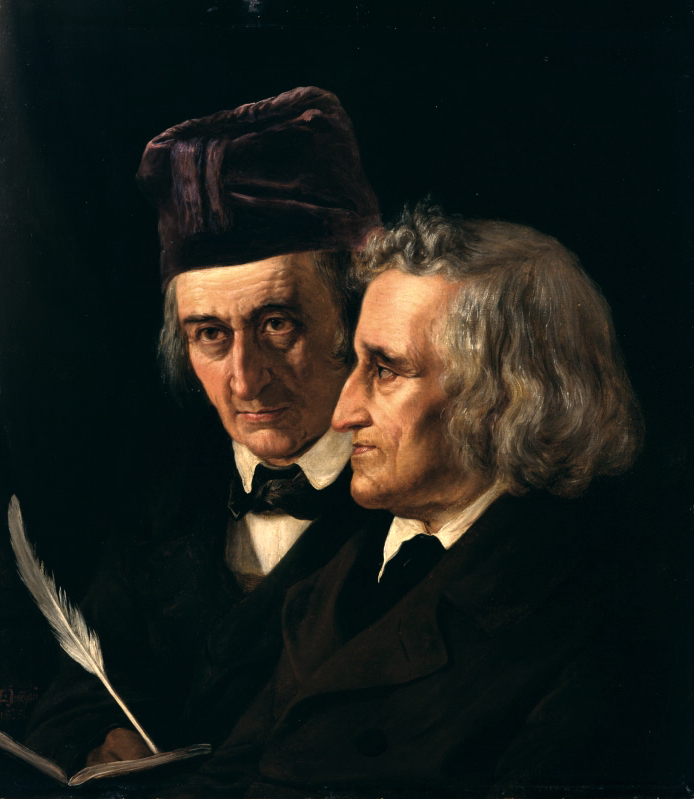
Elisabeth Jerichau-Baumann [Public domain], via Wikimedia Commons

Thursday, April 16, 2015

Essay Week 13

A Grimm Tale


I did the Grimm Tales Hunt unit for this week. This was a great unit because it had some stories that most readers would be familiar with and it also had some other stories that readers would not have heard of before. The version by Hunt was also a strong version because it had all the elements that a reader would have expected a Grimm story to have, Hunt did a great job of capturing the themes but also the feel of the stories (not sure if that makes sense). The pictures throughout the stories were also new to me, so I found them to be another interesting part of the Unit. This unit has something for everyone and the best thing about it is that I had fun reading these to my two little nieces over Skype so it was fun to bring these stories to a new generation.

Picture Attribution
Arthur Rackham [Public domain or Public domain], via Wikimedia Commons

Thursday, April 9, 2015

Robin Hood Ballads Essay Week 12

Movie Robin Hood


This week I read the Robin Hood Ballads unit. I think of all the units I have read so far that this was probably one of the most unique units. The entire unit was in song form, so reading it was like reading some old time poetry. I had a very Chaucer feel to it. One of the great things about this unit is that a lot of them had an embedded Youtube video of someone singing the ballads, so that added an extra dimension to this unit. I have always loved movies and tales that involved Robin Hood, so it was a no brainer for me to pick this unit. In the unit the stories that were presented were all pretty familiar to me so there were no real surprises for me as far a new knowledge. However, because they were in the forms of ballads I was able to enjoy these stories on a whole new level. Though they were in ballads they were not hard to understand or follow. The pictures in the unit were another part of the unit I enjoyed. Some of the artwork I had never seen before, actually most of it was new for me. I was always familiar with the Robin Hood I have seen in the movies so to come across other art work that was influenced by the legend, if that is accurate because there is some argument that he was an actual person, was interesting to me. I had never thought of the cultural effect that Robin Hood had on that region, but now after reading the stories in the unit, seeing the artwork, and hearing the songs it is clear that Robin Hood is as big a part of the culture as the Arthurian legends.


Picture Attribution
By United Artists, cinematographers Arthur Edeson & Charles Richardson (http://douglasfairbanks.org/robin1.jpg) [Public domain], via Wikimedia Commons

Wednesday, March 25, 2015

Essay Week 10

Apache Girl


For this week I did the reading unit Apache Tales in the untextbook. I did not have a good experience with this unit and I would recommend that this unit be replaced. I am not advocating that tales from the Apache people be removed just replaced with a more readily understandable version. This unit was translated in what appears to be a very literal word for word account of the story, the problem with that is that these units are hoping to serve the purpose of bringing the stories and culture of different groups of people to other people that have no understanding or point of reference for these cultures. So the translation of these stories is great for English speaking Apache that understand the culture, but they are not for people that don’t. I found these stories to be jumbled and hard to understand. Even after a second or third reading of the stories I was still unable to connect with them in a way that gave me insight to the Apache people and culture. I was highly disappointed by this because Native culture is something that I have found great interest in since first discovering the Native folklore a few years ago. I understand that each time one of these stories is changed that some of the culture is lost, so there is a fine line between updating these stories for the masses and completely rewriting them so that there is no hint of Native culture remaining. I just feel it would have been better to try to seek out other stories in the Apache culture that would first open the door to the reader to give a basis to understand some of the motifs in the folklore then they would be able to better understand these stories.

Picture Attribution
By Pierce, C.C. (Charles C.), 1861-1946 [Public domain], via Wikimedia Commons

Monday, March 9, 2015

Essay Week 9

Little People


My Essay if over the Cherokee Myth’s Unit. This is by far my favorite unit in the class. I think one of the reasons for this is because of the geographical relevance to the students. These are stories and myths that have originated here where we live. The Cherokee people are based in Oklahoma and are a huge part of our nation’s history. I feel that in college, as well as in our society we seem to celebrate the cultures of other nations and we never stop to consider the culture that existed and still exists within our nation what was homegrown. So few times in my college experience have I taken the time to realize that I am surrounded by this culture that is as rich as any other culture on Earth. These stories don’t just give readers insight into the mythology of the Native people, but they act as a historical road map to their belief system. They also continue to be relevant by teaching age old lessons about nature, humanity, and honor. This is one of the most important units in this class to me because it gives voice to the history of the Native people that was not written by the hand of western civilization. This is a account of how Natives view their relationship with the Earth and other humans through their eyes. This makes this a very honest unit in regards to the Native people. After reading one story a reader is able to begin to conceptualize a society that is rich not only in history, but in values as well and a thirst for a better understanding of this history and these values develops which works towards seeking out other Native stories so that a greater understanding of a people can be had.


Picture Attribution
By unknown illustrator [Public domain], via Wikimedia Commons

Friday, February 27, 2015

Japan Fairy Tales Essay Week 7

King Killing Centipede


For this week I read the unit Japan Fairy Tales by Ozaki. Most of the stories in this unit played out like a typical western style fairy tale, but with a mix of eastern influences. One of the things that I found most surprising was that in these stories there really was not a whole lot of action. In the Bag of Rice story there was a lot of time given to establishing the problem with the centipede and the reward given to the king along with the king’s life, but the actual battle with the centipede seemed to happen quickly. It was over before it started. In the story about the boy that was strong, there was a huge amount of time given to the life of the boy when he was young, but as far as the boy in action there was very little, although there companions of the boy did get a lot of time. There seemed to be a lot of time dedicated to the animals as they wrestled but when it came time for the boy it mirrored the bag of rice story because his action was over quickly. These stories seemed to focus mostly on the peripheral characters in the story much more than the main characters. I am not sure but this is possibly because the characters in the story are supposed to represent the personality of the main characters and also work to establish the values of the main characters. Still I was pleased with the stories and much like the western fairy tales I heard as a child these stories all had lessons to teach. They were positive in nature and also hinted at possible fate scenarios, in which each person on earth has a destiny and that they should accept their place in the world because there is a plan for each of their lives.


Picture Attribution

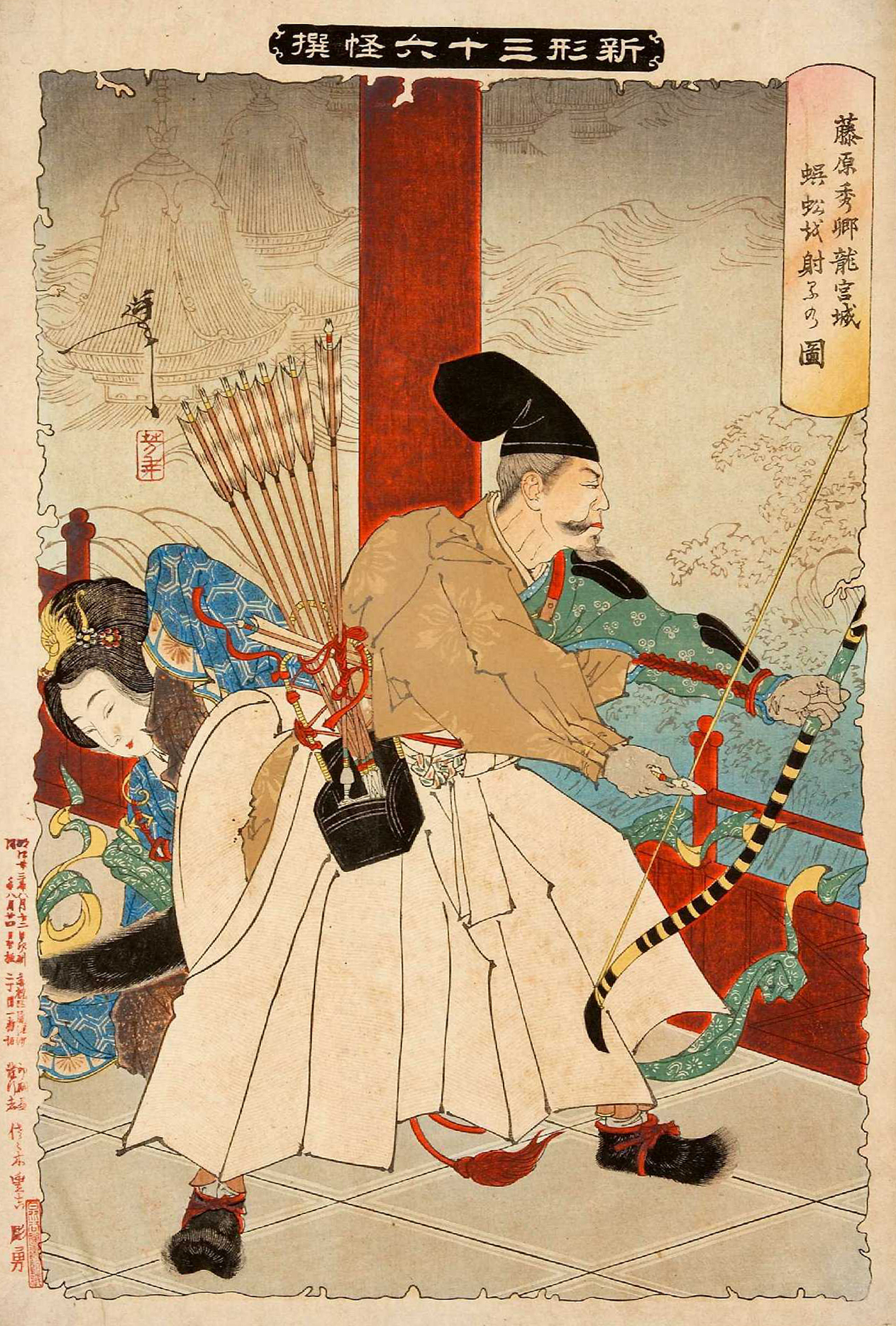
Tsukioka Yoshitoshi, Fujiwara no Hidesato, August 1890. From the Thirty-six Ghosts series. 9.25" x 14.25". The print depicts Fujiwara no Hidesato shooting a giant centipede at the palace of the Dragon King.

Thursday, February 5, 2015

Essay Week 4

Opium

The Folktales of Bengal is a collection of stories from that region of the world. This unit suffered from the length of some of the stories. In particular the Origin of Opium story. This story is a simple story about how the poppy tree became to exist. The problem with this story is that it becomes repetitive. The main character which will later become the poppy tree starts out as a mouse. Then through a series of boons become different animals until finally becoming a woman that marries the king and becomes queen. The woman then falls to her death in a well and is made into the poppy tree by a Risshi. This is a simple story that could have been shortened and allowed for more room in the Unit for other stories. The enjoyable thing about Indian folk lore is that they leave room to expand on the stories so that a larger story can be told, but in this case the story seems to be expanded on too much. The mouse becomes a cat, then a dog, then ape, then a boar, then an elephant, then a woman, and finally a poppy tree. That is too many steps and half way through my reading of this story I had a feeling of “Cmon get a move on” because the repetitive nature of the story. I kept wondering how many more animals this character would become before I found out the origin of opium. I know that with other stories in folklore there are a number of different versions of the stories and with some searching I am sure that a shorter version could be found and used without hurting the message of the story. This would allow for readers to discover more stories from this region by making room in the unit. This critique however is not to say that this story was bad, just to say that in the format of this class the length works as a detriment to the discovery of other materials.


Picture Attribution
By KGM007 [Public domain], via Wikimedia Commons

Friday, January 30, 2015

Essay Week 3

The Odyssey
This week I did the reading unit in classical The Odyssey by Homer. This was an entertaining unit. The readings in this unit did give a new reader a great introduction to the epic and translation to English by Tony Kline was excellent. However, this unit was lacking in one area because, it started in the later chapters of the epic instead of the very beginning. I understand that it may not be possible to create unit from this epic that included all the chapters of the epic, but I feel it is important to allow the reader to have all the information about the characters in the book.

While in the opening introduction of the unit the beginning point of the unit is explained. There is not enough information in this introduction to do the early chapters of the Odyssey justice. I think this unit could use more than just a simple introduction, maybe this could come in the form of a separate starting chapter that works as a companion to the remainder of the rest of the chapters of the book. There are so many things that happen to the characters in the Odyssey that by writing a “Cliff Notes” version for the first few chapters would be more useful that a simple explanation in the introduction.

Another way to accomplish this is to create an expanded introduction. I understand that the Iliad unit can act as a way to give new readers more information about these characters, but the issue with that is that readers may not read the Iliad, so the Odyssey unit must stand alone. By expanding the introduction so that it leads right up to the events in the opening chapters of the unit a new reader will gain a better understanding of the story. Also, this would be a good place to introduce the reader to the Iliad which will hopefully encourage them to seek out that unit and read it also. Though the introduction to the unit does all this, I feel it does fall short and would be more interesting if was written as more of another chapter and expanded by around 300 words. In all however, this was a very entertaining unit that have some of the best parts of the Odyssey in it so that new readers would be introduced to the Odyssey in a way that was not boring and full of enough information that they would be able to understand the story.


Picture Attribution
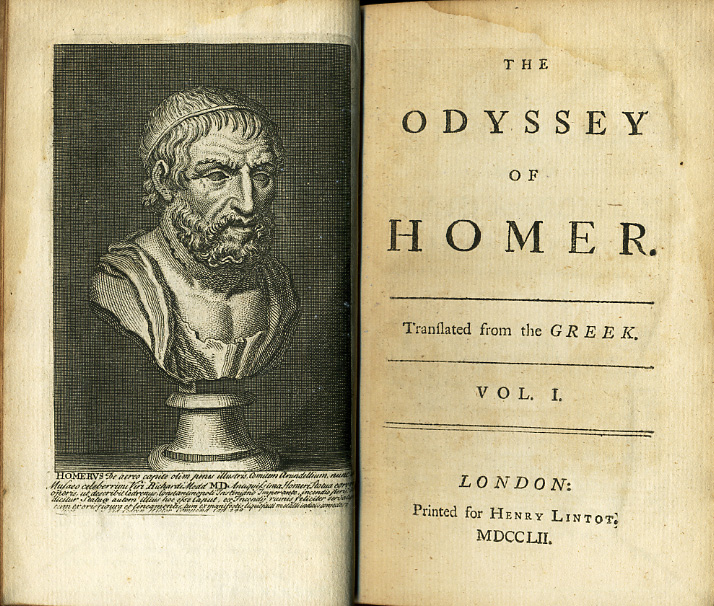
Alexander Pope [Public domain], via Wikimedia Commons